


I have been distracted. It has been a productive distraction, or this is what I am telling myself and telling you.
I have been building a digital knowledge archive. Specifically, I have assembled a selection of my writings from between 1994 and the present. These files have been staged in a form they can be used to load and orient an AI-enabled knowledge assistant. It is an admittedly strange undertaking especially if we consider the scope and scale of this collection. Fortunately, I have several reasons for doing this and, more fortunately still, these reasons overlap and support each other.
One reason for constructing this archive is to support my doctoral research project at the Lancaster University Management School (LUMS). Here my interests are focused on the interplay, or dynamic, between individual writing, group dialogue, and Artificial Intelligence. So a digital archive populated with my own materials can be seen as a demonstration of what we might do with materials created within a management education environment. This was one thing I could do that could be done without imposing on other people too much or without inviting a boatload of research ethics review and oversight (these measures are positive and essential but they are also onerous). This was also something I could use to ‘walk the talk’, illustrating my own willingness to share my materials digitally which is what I will be asking others to do at some point. It can also be used to illustrate the types of uses we may wish to make of a digital archive once it becomes available to us.
Another reason is an interest I have in mining my prior written work for lessons, cases, patterns, and practices that we may want to revisit and perhaps even elevate to greater visibility. I saw that I had an opportunity to do this because it has been my way of working over the years to document my projects as we go, and to surface insights from those projects in conference presentations. As some people know, I have a long history of over-investing in these artifacts. It only makes sense that I find a way to harvest something of value from these past efforts.
The reasons for constructing and refining a digital archive have led me, even forced me, to adopt several tactics. One of them was that I have found that it has been beneficial for me to stage everything in the collection using the DITA XML format. On one level, this is unsurprising. On some other levels, it is very surprising indeed. In the academic sphere, for example, DITA is an alien concept. In this sphere, other XML standards, namely the Text Encoding Initiative (TEI), hold sway. However, mechanisms that come with DITA prove incredibly helpful when it comes to dealing with the onerous data management demands of the academic research ethics regime. Things like Maps and the ability of the Open Toolkit to generate all manner of outputs at varying levels of granularity are capabilities that many in this academic sphere seem envious of and rightly so.
When it comes to engaging different AI services, as this too is something that the academic context forces me to deal with, having everything in a stable source representation from which to address each new, or changing, format and packaging demand is showing itself to be a lifesaver. Even if I confine myself to just one AI service, this service will regularly change its preferences. With my DITA source, I can usually respond to these changes in a matter of minutes using my Oxygen XML Editor, the DITA Open Toolkit, and the occasional Python script. And this is me talking – a manager whose team members routinely plot to have all software removed from my machines other than MS PowerPoint (and doing so as a service to humanity).
As a closing thought, I would say that establishing and leveraging a digital knowledge archive, as a form of AI-enabled interactive knowledge assistant, has been illuminating. As we have touched on, it has been illuminating with regards to the tools and technologies I might use. This illumination has mercifully taken the form of confirmation and reassurance. What we have long believed about the virtues of open, structured content are real and they are perhaps more relevant today than they ever have been.
It has also been illuminating in that it has helped me to see into and learn from what I myself have written over the years. The archive now stands at 550,000 words (!) so it is clear that this is too much to re-read or even to usefully browse. An AI assistant, however, can rummage through this archive and bring up very interesting insights. Sometimes they are a little wonky but, if I am being honest, so are some of mine. Others hit me hard and I find myself saying “I never said that in those exact words, but now that AI has phrased it that way, I wish that I had… and from now on that phrasing will be part of my language.”
The project going forward will see me adding more of my past presentations, along with my notes for them, and more case studies about which I have extensive ‘files’. From these, I expect to be able to harvest more and more insights, and to feed more and more materials into my evolving book project.
And yes, I am coming around to a new name for my archive – The Content Manager. This title bristles with two competing meanings. Both fit. One is that I am a manager whose career has focused on the challenge of managing content. The other is that I am a manager who is quite content with where my career has arrived and quite blessed that I am in a position to stand back and survey things on such a grand scale. Both of these senses also fit into, and work with, my rather extreme academic undertakings where I believe my experiences, and those of the community with whom I have worked over the years, have something to offer.
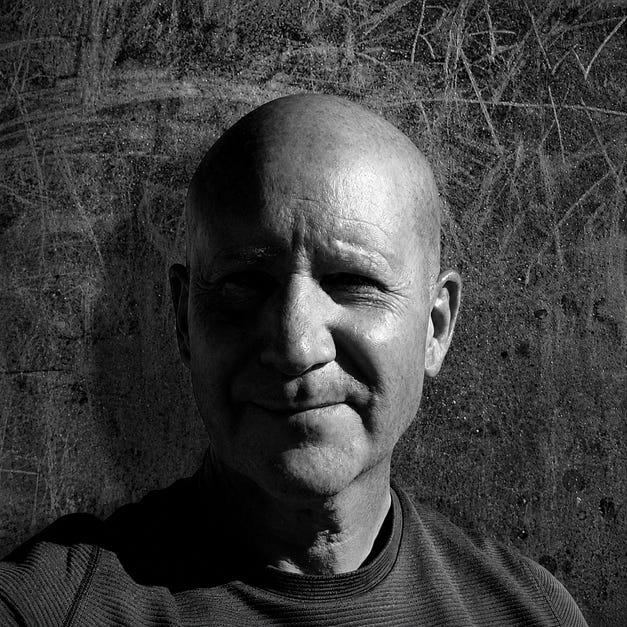
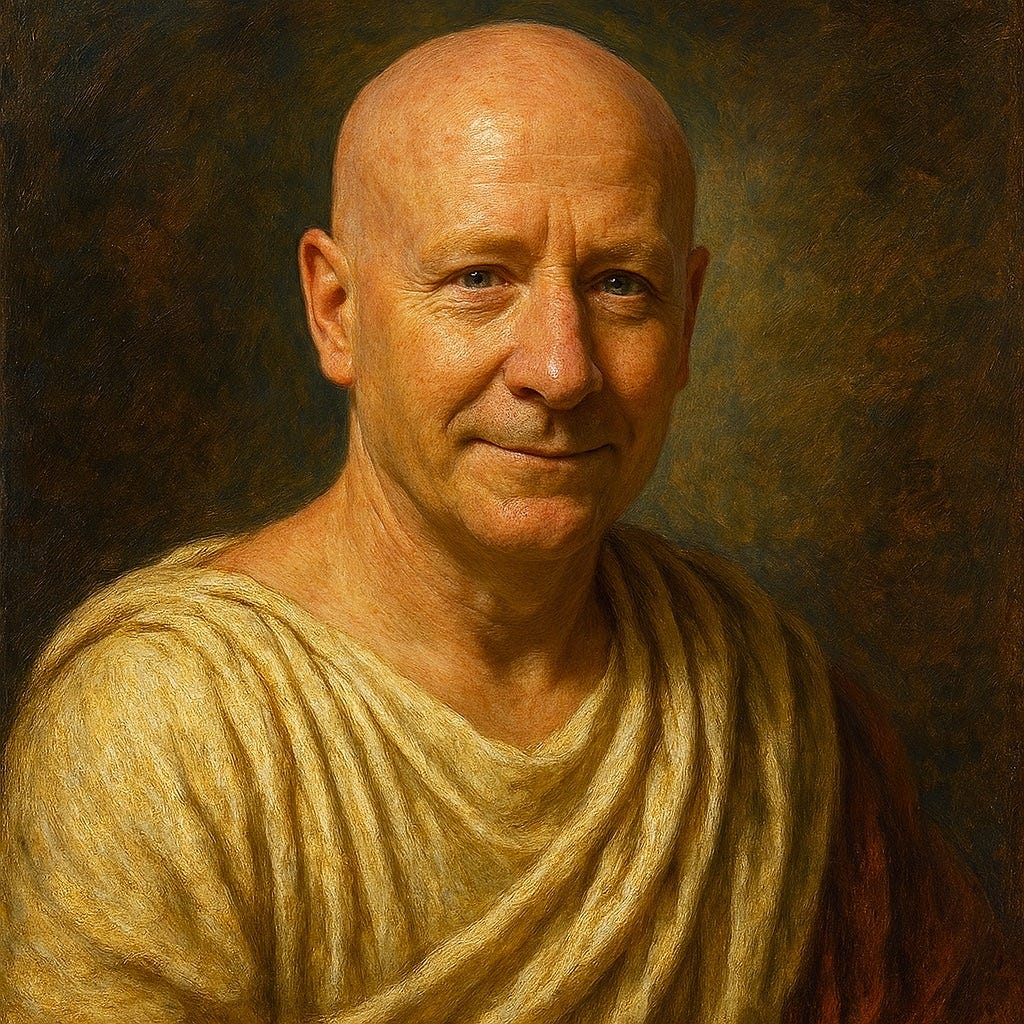
This new branding is an evolution from, and an improvement on, its predecessor which was called The Reflective Sage. There was some merit behind this previous branding and especially because it was not one I had suggested. It was a name offered up by others and that was intended to tease me, gently, lovingly, and not inappropriately. The Reflective Sage also meshed nicely with a different image of me, one that was generated by AI and that presented me as a Greek Philosopher. I am not sure that swapping out the associations with Greek Philosophy for an image (seen above) that loosely associates me with Ludwig Wittgenstein is going to improve my fortunes. But there it is…
Great new title!